top of page
  • Writer: vivek school
    vivek school
  • 5 days ago
  • 4 min read

From a very young age, children start to notice, learn, and understand the world around them. Their young minds absorb everything they see, hear, and feel. That’s why choosing the right play school is not just a small decision, but it’s a step that will decide your children’s future. A good play school doesn’t just teach basic things like colours, numbers, and the alphabet. But it helps your children build the right habits, learn how to talk and listen, make friends, and become confident in themselves. It also teaches them how to be curious, ask questions, and enjoy learning through fun and sports & physical well-being.

If you live in Baddi, you will find many play schools offering different features and promises. Some schools focus on academics, while others highlight fun-based learning. But how do you know which one is the best for your child? If you are struggling to choose a play school for your child in Baddi, read this blog until the end to make an informed decision.


ree

Check the School’s Reputation

Before you choose any play school, make sure you know what other parents think about it. A school with a good reputation means many parents trust it, and their children are happy there. You can ask your friends, neighbours, or other parents in Baddi if they have heard about the school. You can also read reviews online or visit the school’s website and social media pages (Instagram, Facebook, YouTube, etc.) for more information. Look for photos, events, and feedback from parents. If possible, consider speaking with a few parents whose children already attend that school. Ask them if their children enjoy going there, if the teachers are kind, and if the school handles problems well. 


Safety and Cleanliness

Your child’s safety is the most important thing, and you should never compromise on it. Before choosing a play school, make sure the building of the school is safe and well-maintained. The classrooms, stairs, doors, and play areas should not have anything sharp, broken, or dangerous. Check if there are security guards, CCTV cameras, and proper gates. Children must not be able to leave the school on their own. Also, ask how the school handles emergencies or if the teachers are trained in first aid. Don’t forget to check the cleanliness, as little children can fall sick easily, so the school should be neat and clean.


Teacher Quality and Staff Behaviour

Teachers play a big role in your child’s early learning. A good teacher is not just someone who teaches letters and numbers but someone who is kind, patient, and loving. Small children need more care and attention, so the teacher must know how to talk to them, help them feel safe, and make learning fun. When you visit the play school, observe how the teachers and staff behave. Are they speaking gently? Are they smiling and friendly? Do they listen to the children? This can help you learn a lot about the school’s environment. Also, make sure you ask the teachers if they are trained in early childhood education. 


Facilities and Class Size

A good play school should have the right facilities for young children. There should be clean classrooms, soft mats or child-size furniture, colourful learning tools, toys, books, and a safe outdoor play area. These things help children learn and play comfortably. Also, check if the play school has clean washrooms, drinking water, fans, heaters, and a quiet rest area. All these small things make a big difference in your children’s comfort and happiness at school. The size of the class is also important because your child won’t get enough attention if there are too many children in one class. A smaller class with fewer children means the teacher can give more time to each child, understand their needs, and help them learn better.


Budget and Fees

Every parent wants the best for their child, but it is also important to choose a school that fits your budget. Playschool fees can be different from one school to another. Some may charge more because of extra activities or fancy buildings, while others may offer good education at a lower cost. Ask for the full fee details and find out if there are any extra charges for books, uniforms, activities, or transport. Make sure there are no hidden costs to avoid any surprises later on. Remember, expensive doesn’t always mean better. A school with caring teachers, a clean space, and a good learning plan can be just as good, even if it costs less. So, choose a school where you feel your child will be happy and safe, but also affordable. You can also check out our fee structure for the academic Year 2025-26


Trust Your Instincts

Sometimes, even after checking everything (fees, safety, teachers, and reviews), you may still feel unsure about the play school. That’s when you should consider listening to your instinct. You know your children better than anyone else and can easily determine what’s best for them. When you visit the school, notice how you feel. Does the environment of the play school feel warm, friendly, and safe? Can you see your children being happy there? If something doesn’t feel right, don’t ignore it, even if the school looks good on paper.  Also, watch your child’s reaction. Do they look curious or comfortable during the visit? Children can sense things, too. In the end, go with the play school that feels right to you and your children. A school where you feel calm and confident will likely be the best place for your child to begin their learning journey.


On the Final Note

The play school you choose for your children will play a vital role in their academic and professional success. Your children will learn everything from their play school, including how to make friends, ask questions, write, read, and much more. To provide your children with a strong foundation, choose the best play school in Baddi that is budget-friendly, has patient teachers, great infrastructure, and is safe. If you are unable to find a good play school in Baddi, Himachal Pradesh, contact Vivek International Public School, the best play school in Baddi.


ree

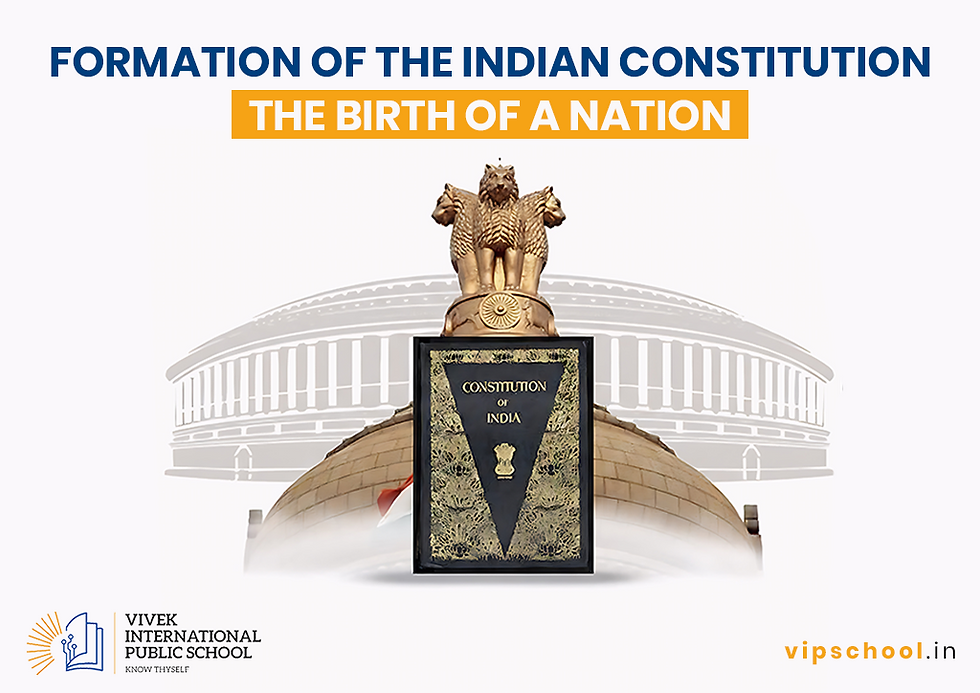
The Indian Constitution is the most important book of our country that tells us how India should work, how our leaders should behave, and what rights and freedoms every citizen must have. Before India became free, people dreamed of a nation where everyone was equal, safe and respected. The Indian Constitution is the most important book of our country that tells us how India should work, how our leaders should behave, and what rights and freedoms every citizen must have. Before India became free, people dreamed of a nation where everyone was equal, safe and respected. This draft was not made in a single day. It was created after many meetings, long discussions, and careful thinking of the members of the Constituent Assembly. If you want to learn more about the formation of the Indian Constitution, read this blog by Vivek International Public School, Baddi, Himachal Pradesh, till the end.


Why India Needed a Constitution


When India became free from British rule in 1947, the country faced many challenges. India was a big nation with people of different religions, languages, and cultures. To keep such a diverse country united and peaceful, India needed clear rules. And a constitution is a book that clearly explains how a country should be run. The other reasons why Indian needed a constitution are as follows:

  • After independence, India needed strict rules to maintain peace and prevent confusion.

  • India wanted every person to have equal rights, whether rich or poor, man or woman.

  • Without clear laws, leaders could misuse their power and exploit the people of India.

  • India is home to different communities, and the Constitution helped bring them together.

In other words. India needed a Constitution to protect its people, guide its leaders, and build a strong, free, and united nation.


How the Constitution of India Was Written


The process of writing the Constitution of India was long and careful. The members of the Constituent Assembly wanted to make sure every part of the Constitution helps India become a strong, fair, and democratic nation. Here is how the writing process happened:

Studying Other Constitutions

The members of the Constituent Assembly studied the constitutions of many countries, like the USA, UK, Ireland, and Canada. They figured out their strengths and their weaknesses to ensure the formation of a flawless Indian Constitution.

Forming Committees

The Assembly created several small groups called committees. Each committee worked on a special topic, such as fundamental rights, elections, finances, and the role of the president and prime minister.

Chairman of the Drafting Committee

A seven-member Drafting Committee was formed, and Dr. B.R. Ambedkar was chosen as its chairman. He played a key role in writing the final draft of the Constitution. This is why he is often called the “Father of the Indian Constitution.”

Debates and Discussions

The Constituent Assembly held long debates. Members shared their ideas, concerns, and suggestions. These discussions were important because they helped make the Constitution fair for everyone.

Drafting and Revising

A first draft was prepared and shared with the public. People gave their feedback, and the Assembly made many changes based on these suggestions. This process continued until they were satisfied.

Final Approval

After almost 2 years, 11 months, and 18 days, the final draft was ready. It showed the hard work, cooperation, and vision of all the members of the Constituent Assembly.


Adoption of the Constitution (26th November 1949)

After years of hard work, the Constituent Assembly was ready to adopt the Constitution. On 26th November 1949, the Assembly met in New Delhi to officially approve the final document. This day is now celebrated every year as Constitution Day in India. The adoption of the Constitution was very important. It gave Indians a complete set of rules for the government and for protecting the rights of all citizens. From this day, India became a free and independent nation that could make its own laws. The Constitution started to work fully on 26th January 1950, which we celebrate as Republic Day.


Conclusion

The Indian Constitution is the foundation of our country. It gives us rights, freedom, and equality, and guides the government to work fairly. Our constitution makes India a strong, democratic, and united nation. Every year, when we celebrate Constitution Day on 26th November, we remember the importance of the Constitution and the dream of a country where everyone is safe, respected, and equal. To keep learning such important topics, stay tuned to the Best School in Baddi , Vivek International Public School, Baddi, Himachal Pradesh.


  • Writer: vivek school
    vivek school
  • Nov 25
  • 5 min read

Exams are a part of your school life, and they show what you have learned in the previous months. But sometimes, exams can make you feel scared. Your heart starts beating fast, your hands feel wet, and your tummy feels funny. You may think, “What if I couldn’t remember anything?” or “What if I don’t score well?” These thoughts can make you feel worried. And that’s what is called exam stress and anxiety, and it happens to many kids. Even some adults feel like this sometimes. But the good news is, you can learn how not to feel stressed and anxious, how to think clearly, and how to do your best. If you also experience stress and anxiety during your exams, read this blog until the end to learn what’s making you feel worried, how to make a good study plan so you don’t feel rushed, and many more things that will help you stay calm during exams.

Tips for Managing Exam Stress and Anxiety

Know What Makes You Stressed

To manage stress and anxiety during exams, first, you have to determine what makes you feel bad. Sometimes, stress comes when you think there is too much to do and not enough time. Sometimes, you get stressed when you don’t understand something you are trying to study. You may also feel stressed if people around you are shouting, if you are not sleeping well, or if you are scared of failing. So, take a few moments out of your busy study schedule and think:

  • Is it a hard subject?

  • Is it not having enough time?

  • Is it too many chapters to study?

  • Is it because I didn’t eat or sleep well?

  • What is making me feel worried right now?

Once you know what causes you stress, it becomes easier to address it. You can talk to someone, make a study plan, or take a short break.


Plan Your Study Time

Preparing for your exam without a study plan can make you feel lost and stressed. But when you make a simple plan, everything starts feeling easy. To create an effective study plan, you have to ask yourself:

  • What do I need to study?

  • Which subjects are hard for me?

  • How many days do I have before the exam?

Now, take a paper and write down what you will study each day. Do not try to study everything at once, but break big topics into small parts. For example, you can study one chapter of math today and do some science tomorrow. Do not forget to plan short breaks between study sessions!


Take Care of Your Body

If your body is tired, your brain won’t work well. That’s why you must take care of your body during exam time. Here are some tips to help you take care of your body:

  • Do not skip your meals and eat a balanced diet that gives your body and mind energy to work efficiently. Include fruits, veggies, rice, eggs, or whatever healthy food you like in your diet.

  • Drink enough water, as it helps your brain stay sharp. Keep a water bottle on your desk and keep sipping water throughout the day to ensure your body stays hydrated and keeps functioning well.

  • Try to sleep at least 7–8 hours every night. Learn about sleep hygiene. If you stay up too late, you will feel sleepy and forget things easily.

  • Do not sit and study all day, as it won’t help you achieve your goals. Get up, stretch, walk around, or play for a little while to keep your mind fresh.

You can only achieve your academic goals when you are physically, mentally, and emotionally healthy. So, take care of yourself!


Use Good Study Methods

To remember better, you need to use smart ways to study. Here are some simple study methods that work well:

  1. Write and Learn: After reading, write down the main points, as it helps you remember better than just reading.

  2. Teach Someone Else: Try to explain what you learned to a friend or family member. If you can teach it, that means you understand it well.

  3. Use Flashcards: Write all the questions on one side and answers on the other. Ask yourself and check the answers.

  4. Break It Into Small Parts: Do not try to learn a big chapter all at once. Break it into small pieces and study one part at a time.

  5. Revise Often: Don’t study something once and forget it. Go back and revise it again after one or two days.

With good study methods, you can save time and learn faster. So, do not study hard, but study smart to achieve your academic goals.

Nowadays, children feel more stressed than adults. With school, homework, tuition, and constant pressure to perform, their day leaves little room for relaxation, joy, or spending time with their family. After-school hours often turn into more study time or, worse, endless screen time that doesn’t help them grow and messes with their brain. But these hours can be used differently and better. Children need space to breathe, explore, and develop real-life skills outside textbooks. The right after-school activities can reduce stress, boost creativity, and build confidence, all without adding pressure to their little and creative brains.

Ask for Help

You don’t have to do everything alone. If you struggle to understand something, it is okay to ask for help. You can ask for help from:

  • A teacher

  • A classmate

  • A tutor

  • A parent or older sibling

Just say, “I do not understand this,” or “Can you please explain this to me?” They will surely help you. If you feel too worried or sad, you can also talk to someone about your feelings. Talking helps a lot!


Relax Before the Exam

Most students try to study everything again the night before the exam. This can make them feel more nervous. And you don’t have to make this mistake. Here is what you should do the night before the exam:

  • Revise lightly

  • Sleep well

  • Pack your bag

  • Do something relaxing

On exam day, take deep breaths before you enter the exam hall and tell yourself, “I am ready and I will try my best.” Staying calm helps you think clearly. So, relax and keep working smart!


Take a Break After the Exam

REST once your exam is over. Your brain and body need a break. You have worked hard. You studied, revised, and gave your best. Now, do not rush to study for the next exam right away. Take a little time to relax. Here are some of the best things you can do after the exam:

  • Go for a walk

  • Watch something you like

  • Talk to friends or family

  • Eat your favourite food

  • Take a nap if you feel tired

By taking a break once your exams are over, you can make your mind feel fresh again. After resting for a while, you will be ready to study for the next exam with more energy.


Conclusion

Feeling stressed and anxious before or during exams is normal. Not only children but also adults feel the same before a big exam. But it should not significantly affect your performance. You can manage your stress and anxiety by knowing what makes you stressed, making a study plan, taking care of your body, talking to someone you trust, or using good study methods. All the detailed information you need on all these is mentioned above in this blog. For more such information and blogs on similar topics, stay tuned to Vivek International Public School, Baddi, Himachal Pradesh.


© Vivek International Public School

LET'S TAKE IT TO THE NEXT LEVEL

Thanks for submitting!

bottom of page